Lasting Icons

“Two Annas”
MuzArts
Tovstonogov Bolshoi Drama Theatre
St. Petersburg, Russia
December 2025 (video)

by Ilona Landgraf
Copyright © 2025 by Ilona Landgraf

 1. P.Malikova (Anna Akhmatova), E.Sevenard (Anna Akhmatova), and D.Potaptsev (Nikolai Gumilev), “Akhmatova” by Y.Possokhov, MuzArts 2025 © Diaghilev P.S. Festival/M.Vilchuk The production company MuzArts, founded in 2014 to showcase the Bolshoi Ballet’s prima ballerina, Svetlana Zakharova, has grown into a vital force of Russia’s ballet scene. Their recent production, Two Annas, was supported by the Diaghilev P.S. International Festival of Arts, a prominent, intercultural, cross-genre event that has been held in St. Petersburg since 2009. Two Annas premiered at St. Petersburg’s Tovstonogov Bolshoi Drama Theatre this February and received its Moscow premiere at the Maly Theatre. Thanks to the MuzArts’s director, Yuri Baranov, I was able to watch a video of the production.

 3. D.Potaptsev (Nikolai Gumilev) and ensemble, “Akhmatova” by Y.Possokhov, MuzArts 2025 © Diaghilev P.S. Festival/M.Vilchuk 2. P.Malikova (Anna Akhmatova) and E.Sevenard (Anna Akhmatova), “Akhmatova” by Y.Possokhov, MuzArts 2025 © Diaghilev P.S. Festival/M.Vilchuk The title’s Annas are the Russian and Soviet poetess, Anna Akhmatova (1889-1966), and Anna Pavlova (1881-1931), both symbols of the Silver Age. I can’t say for certain, but presumably they never met in person, as Two Annas is a double bill of two separate ballets: Akhmatova by Yuri Possokhov and Pavlova by Pavel Glukhov. The artistic team included set designer Maria Tregubova, costume designer Svetlana Tegin, and lighting expert Ivan Vinogradov.
4. E.Sevenard (Anna Akhmatova), “Akhmatova” by Y.Possokhov, MuzArts 2025 © Diaghilev P.S. Festival/M.Vilchuk 5. E.Sevenard (Anna Akhmatova), A.Putintsev (Amedeo Modigliani), P.Malikova (Anna Akhmatova), and ensemble; “Akhmatova” by Y.Possokhov, MuzArts 2025 © Diaghilev P.S. Festival/M.Vilchuk Felix Mikhailov wrote the libretto and acted as the production’s director. Music by César Franck accompanied Akhmatova; Ilya Demutsky composed the score for Pavlova. Both were played by the Opensound Orchestra at whose piano sat Andrei Korobeinikov. Except for Ildar Gainutdinov, who performed with Pavlova, all dancers are on the Bolshoi Ballet’s roster.

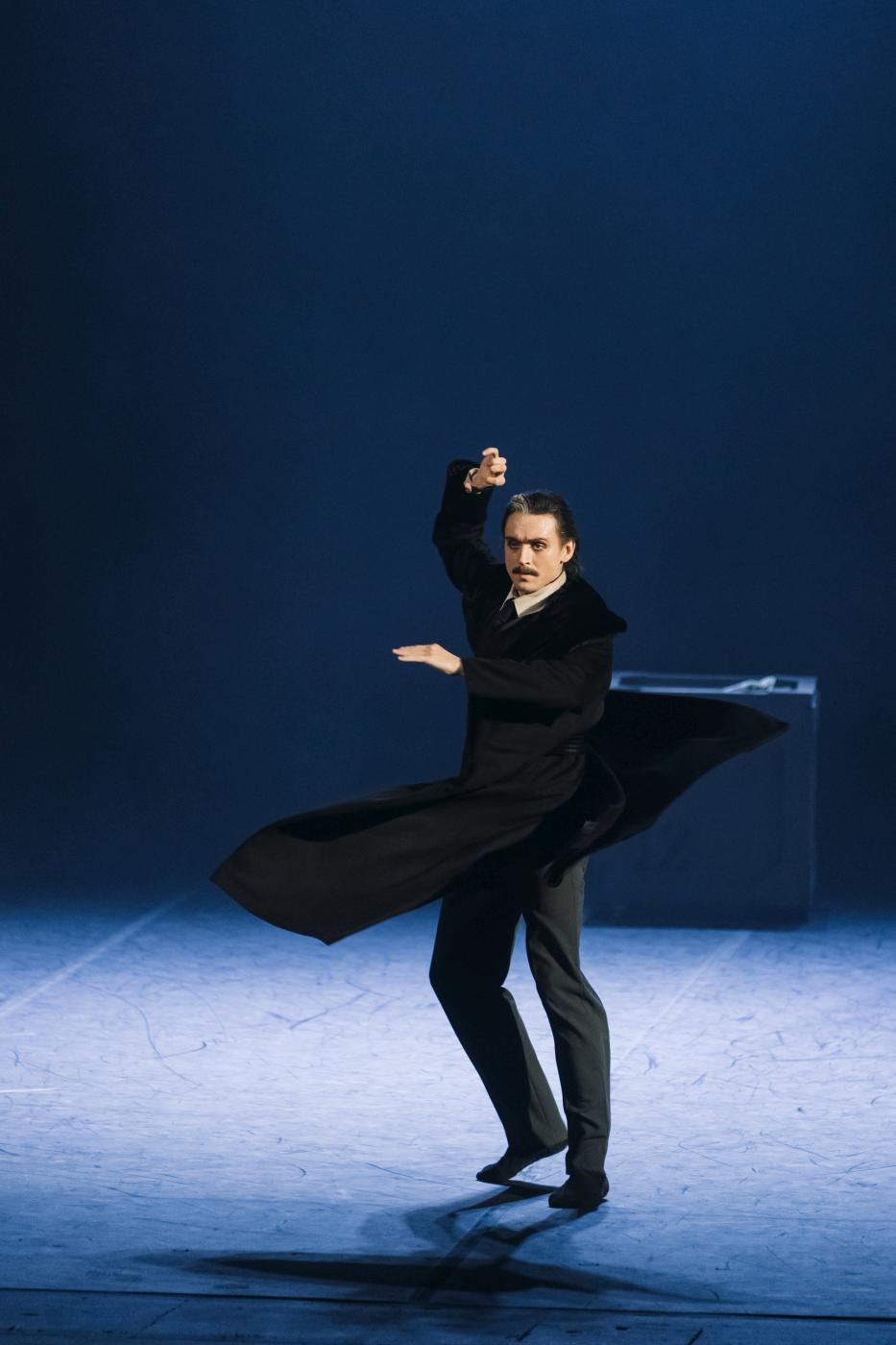
6. E.Sevenard (Anna Akhmatova), “Akhmatova” by Y.Possokhov, MuzArts 2025 © Diaghilev P.S. Festival/M.Vilchuk Akhmatova features the love triangle between Akhmatova, her husband, Nikolai Gumilev, and the Italian painter and sculptor, Amedeo Modigliani, whom she met in 1910 on her honeymoon in Paris. Memories and many of Akhmatova’s poems (spoken by Polina Malikova, a drama actress of the Tovstonogov Drama Theatre who portrayed Akhmatova) added context to happenings on stage.

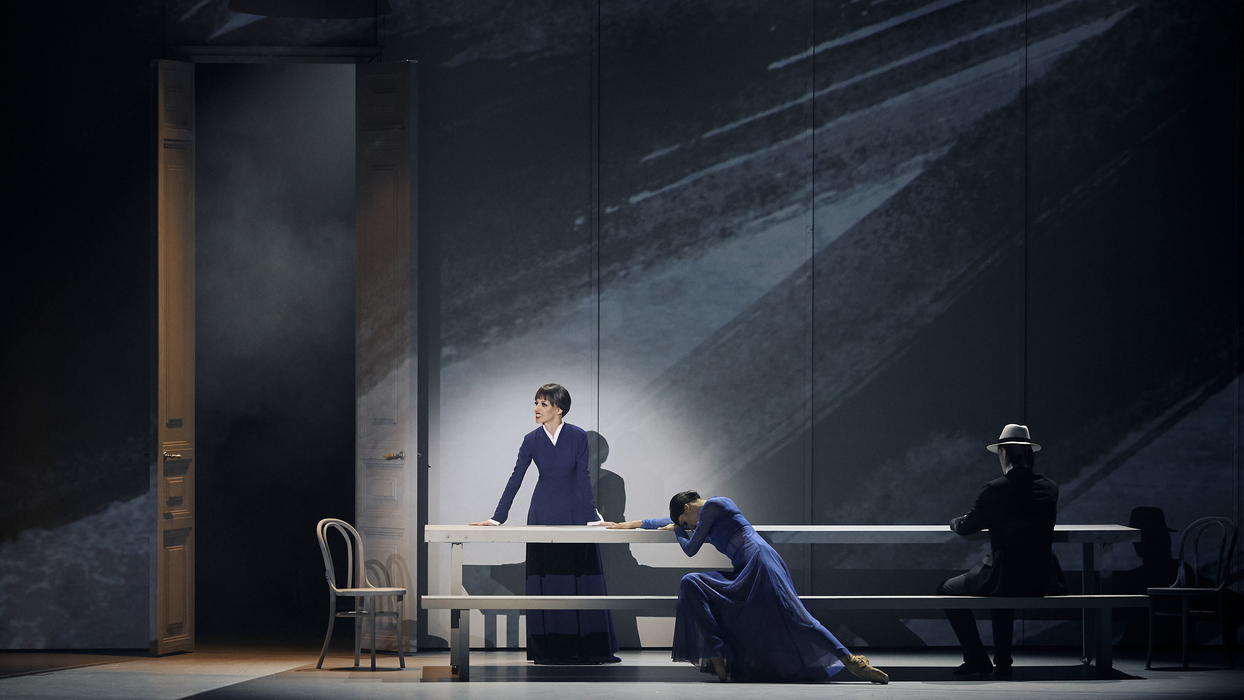
Malikova’s Akhmatova stood in the doorway of a high double door accompanied by a metronome, the quick tick-tock of which sounded like time flying by. The rectangle of light that shone through the door onto the gloomily gray stage resembled a catwalk. It led Akhmatova, who was reciting “There are three epochs to reminiscences…” back in time and down her memory lane.

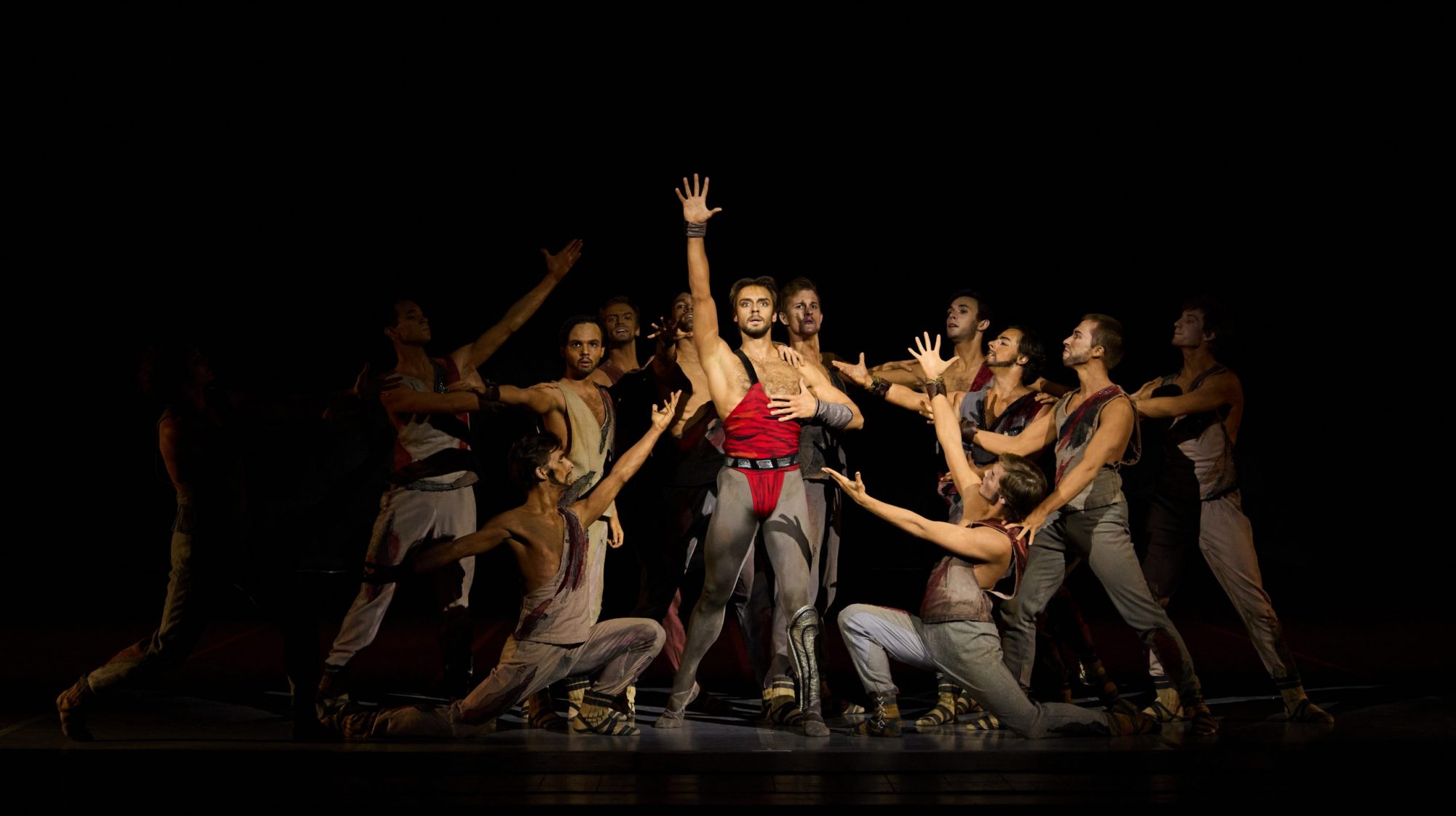
7. A.Putintsev (Amedeo Modigliani), E.Sevenard (Anna Akhmatova), D.Potaptsev (Nikolai Gumilev), and ensemble; “Akhmatova” by Y.Possokhov, MuzArts 2025 © Diaghilev P.S. Festival/M.Vilchuk 8. A.Putintsev (Amedeo Modigliani), “Akhmatova” by Y.Possokhov, MuzArts 2025 © Diaghilev P.S. Festival/M.Vilchuk Gradually, light fell on a plain table and a bench, upon which her younger self (danced by Eleonora Sevenard) rested. Sevenard’s light blue dress and Malikova’s floor-length, ink-blue, white collared dress were the only splashes of vibrant color on an otherwise gray stage. The man sitting motionless next to Akhmatova was Gumilev (Daniil Potaptsev). Slowly coming to life, Akhmatova sat up like a diva. Her languid elegance looked pretentious. She took some probing steps, then twirled toward the darkness, curious to explore its depth. Strength and sensuality combined in her.
9. E.Sevenard (Anna Akhmatova), “Akhmatova” by Y.Possokhov, MuzArts 2025 © Diaghilev P.S. Festival/M.Vilchuk A gently singing violin, soft piano music, and the voice of Malikova accompanied Akhmatova’s blossoming romance with Gumilev. They had just met when a second double door opened and a group of artists, among them Modigliani (Alexei Putintsev), entered. Laid back and bohemian, he instantly attracted Akhmatova and vice versa. The reserved Gumilev did not impress him in the least and was sidelined. Emotional turmoil ensued. Every glance from Modigliani burnt Akhmatova like a flame. Obedience fought the wish to break free. Then Gumilev left through one of the doors. The small strip of light that shone through the door signaled that he hadn’t parted forever.
Modigliani fueled Akhmatova’s femininity, but her nature was erratic. “Off you went as if you had not heard, And the soul got empty and clear again,” recited Malikova as the lovers separated. Soon, they were magnetically drawn back to one another. Gumilev returned furious, desperate, and helpless. For the time being, he kept his composure, but it crumbled as his wife abandoned and then returned to him. “Nothing chains a heart to heart,” seemed to be her motto.
10. P.Malikova (Anna Akhmatova), “Akhmatova” by Y.Possokhov, MuzArts 2025 © Diaghilev P.S. Festival/M.Vilchuk 11. A.Putintsev (Amedeo Modigliani) and E.Sevenard (Anna Akhmatova), “Akhmatova” by Y.Possokhov, MuzArts 2025 © Diaghilev P.S. Festival/M.VilchukOn one occasion, after Akhmatova had left Modigliani for Gumilev, Modigliani rolled across the floor like a nerve-racked, anguished bundle. In her memories, Akhmatova wrote that “Obviously [Modigliani] began drinking at a later stage, but hashish had already made its appearance in the stories he told.” A “certain madame” (Yaroslavna Kuprina) appeared in his life and exerted a great influence on him. Because of her, Akhmatova lamented that “No letter came for me today.”
12. Ensemble, “Akhmatova” by Y.Possokhov, MuzArts 2025 © Diaghilev P.S. Festival/M.Vilchuk Contrary to her earlier lines (i.e. “The two of us won’t share a glass together”), she did reunite with Modigliani, who seemed eternally grateful but suddenly looked vulnerable. Gumilev must have learned about his wife’s latest departure from the letter he crumpled up. He then lay flat as a pancake on the table and curled up like a lost child.
As Akhmatova continued to feel torn between two men, Gumilev’s contempt grew. He dumped his wife into Modigliani’s arms, his limbs thrashing in the air. It wasn’t clear whether he was angry about Akhmatova or about having cleared things up. From that moment, the color of Sevenard’s dress was muted.

13. Y.Kuprina (Jeanne) and E.Sevenard (Anna Akhmatova), “Akhmatova” by Y.Possokhov, MuzArts 2025 © Diaghilev P.S. Festival/M.Vilchuk 14. E.Sevenard (Anna Akhmatova), “Akhmatova” by Y.Possokhov, MuzArts 2025 © Diaghilev P.S. Festival/M.Vilchuk Akhmatova later lost sight of Modigliani. No one knew him, Malikova said, and “Someone described him as a ‘drunken monster’ or something of the sort.” Perhaps the many pages that flew onto the stage from the left wing like fallen leaves in autumn symbolized the end of their romance. Perhaps they testified to Akhmatova’s success as an author.
The three nameless couples that intermingled with the main protagonists several times knelt in line with them in a final arm 15. P.Malikova (Anna Akhmatova) and E.Sevenard (Anna Akhmatova), “Akhmatova” by Y.Possokhov, MuzArts 2025 © Diaghilev P.S. Festival/M.Vilchuk movement routine, the intention of which I failed to grasp. As Malikova and Sevenard each walked toward opposite doors, Modigliani’s 1911 drawing of Akhmatova hung above their heads. The last poem Malikova recited was “Twenty-First. Night. Monday.” It mentioned a secret that reveals itself to some, “And on them silence settles down.” Together with Malikova, this secret vanished behind the slowly closing door.

Unlike in The Seagull or The Queen of Spades, for example, Possokhov’s choreography lacked intensity and clarity, but was similar to memories gilded by time. The many poems provided a strong framework, especially since Malikova was almost constantly on stage. César Franck’s Piano Quintet in F minor added acoustic depth.

16. Scene from “Pavlova” by P.Glukhov, MuzArts 2025 © Diaghilev P.S. Festival/M.Vilchuk Pavlova opened with a sound by Ignat Krasikov’s clarinet that must have tapped an old underground pipeline. Once surfaced, it developed into a melody that fizzed and warbled like a cheeky bird. Tongue-in-cheek humor immediately filled the air. Lush red drapery and a semicircular spotlight turned the stage into an intimate cabaret. Apparently, one ballerina wasn’t enough to portray an artist as scintillating as Pavlova, so Glukhov employed six. Three of them (Anastasia Stashkevich, Yaroslavna Kuprina, and Elizaveta Kokoreva) performed solos and pas de deux, and the other three joined them in the final scene. Kokoreva in particular danced a great deal (and superbly conveyed Pavlova’s charm and esprit).

18. V.Lopatin (Enrico Cecchetti) and A.Stashkevich (Anna Pavlova), “Pavlova” by P.Glukhov, MuzArts 2025 © Diaghilev P.S. Festival/M.Vilchuk 17. V.Lopatin (Enrico Cecchetti) and A.Stashkevich (Anna Pavlova), “Pavlova” by P.Glukhov, MuzArts 2025 © Diaghilev P.S. Festival/M.Vilchuk Walking across the stage as if lost, Stashkevich, Kuprina, and Kokoreva curtseyed (either modestly, coquettishly, or with the grandeur of a seasoned artist) and disappeared behind the curtain. Only a plush swan peeped out from behind, but it quickly ducked its head backstage. Cecchetti (Vyacheslav Lopatin), who strode on stage as if he were a caricature of the Legat brothers, lured the swan back, resolutely clutched its neck, and pulled it on stage.
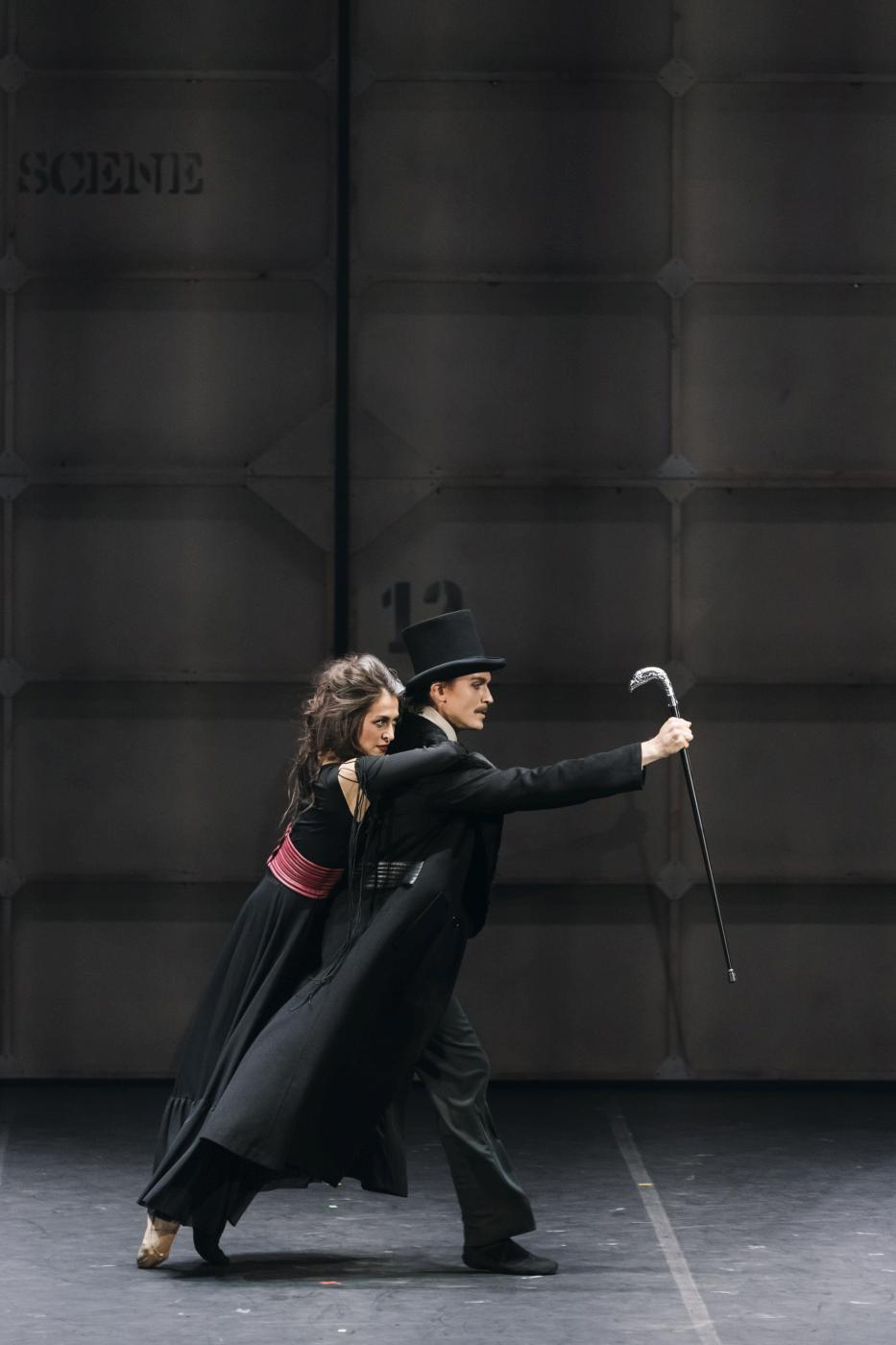
19. V.Lopatin (Enrico Cecchetti) and A.Stashkevich (Anna Pavlova), “Pavlova” by P.Glukhov, MuzArts 2025 © Diaghilev P.S. Festival/M.Vilchuk 20. A.Gainutdinov (Vaslav Nijinsky), E.Kokoreva (Anna Pavlova), and A.Gainutdinov (Igor Stravinsky); “Pavlova” by P.Glukhov, MuzArts 2025 © Diaghilev P.S. Festival/M.Vilchuk 21. E.Kokoreva (Anna Pavlova), “Pavlova” by P.Glukhov, MuzArts 2025 © Diaghilev P.S. Festival/M.Vilchuk The puppeteer attached to the swan’s neck was Pavlova. Cecchetti’s cane worked like a magic wand on her. Its slap urged her to the barre, where it honed her line. It manipulated Pavlova like a puppet rod, supported and flirted with her, and, once in her hands, turned against its owner.

23. E.Kokoreva (Anna Pavlova) and I.Gainutdinov (Mikhail Mordkin), “Pavlova” by P.Glukhov, MuzArts 2025 © Diaghilev P.S. Festival/M.Vilchuk 22. E.Kokoreva (Anna Pavlova), “Pavlova” by P.Glukhov, MuzArts 2025 © Diaghilev P.S. Festival/M.Vilchuk The white swan feather that floored Michel Fokine (Makar Mikhalkin, who wore striped pants, suspenders, and a white bow tie) inspired him to perform a lightweight, acrobatic solo from which the idea for The Swan emerged. An innovative choreographer, Fokine brimmed over with novelties. How Pavlova absorbed the swan nature was unclear, but her arms undulated perfectly at the end of their rehearsal. She didn’t dance the swan with Mikhail Mordkin (Ildar Gainutdinov), though. He was a straddle-legged muscleman with a pirate-like headscarf who grimaced like a surprised comic figure, and he propelled her around, lifted her like barbells, and twisted and 24. M.Orlov (Victor Dandré) and Y.Kuprina (Anna Pavlova), “Pavlova” by P.Glukhov, MuzArts 2025 © Diaghilev P.S. Festival/M.Vilchuk folded her in every direction imaginable. It’s said that Mordkin’s sheer physicality brought out the vamp in Pavlova. Obviously, this was the only way to handle him.

The top-hatted Diaghilev (Mark Orlov), whose overlong arms and hunched posture emulated a gorilla, was busy pacifying the constantly quarreling Nijinsky (Alexei Gainutdinov, who wore a white version of Nijinsky’s Le Spectre de la rose costume) and Stravinsky (Anton Gainutdinov). They chased one another in a boxing fight. In a quiet moment, the first tunes of The Rite of Spring came into Stravinsky’s mind, and once written down, he handed them to Korobeinikov in the orchestra pit. Tied up in knots and terribly punctilious, Stravinsky turned ecstatic while listening to Korobeinikov hammering the staccato rhythm.

27. A.Putintsev (Charlie Chaplin) and E.Kokoreva (Anna Pavlova), “Pavlova” by P.Glukhov, MuzArts 2025 © Diaghilev P.S. Festival/M.Vilchuk 26. E.Kokoreva (Anna Pavlova) and A.Putintsev (Charlie Chaplin), “Pavlova” by P.Glukhov, MuzArts 2025 © Diaghilev P.S. Festival/M.Vilchuk 25. Marc Orlov (Victor Dandré) and Yaroslavna Kuprina (Anna Pavlova), “Pavlova” by Pavel Glukhov, MuzArts 2025 © Diaghilev P.S. Festival/M.Vilchuk Of all the men, Victor Dandré (Mark Orlov), Pavlova’s husband, was the least eccentric, and their wedding pas de deux was calm and poetic. Irresistible sweet, by comparison, was the sight of Kokoreva’s Pavlova next to Alexei Putintsev’s Charlie Chaplin. In real life, Pavlova and Chaplin met at his Hollywood Studio in Los Angeles. A photograph shows them sitting hand in hand on a bench. On stage, Pavlova and Chaplin sat on red chairs playing a “going-to-Jerusalem”-esque game, although there was no shortage of chairs. Spellbound by a film we couldn’t see, they constantly pushed, nudged, climbed across, and accidentally groped one another. A black-and-white clip of Chaplin’s waddling gait, followed by a steam engine that sped toward Pavlova, added a grave overtone.

28.A.Stashkevich (Anna Pavlova) and V.Lopatin (Alexander Vertinsky), “Pavlova” by P.Glukhov, MuzArts 2025 © Diaghilev P.S. Festival/M.Vilchuk 29. A.Stashkevich (Anna Pavlova) and V.Lopatin (Alexander Vertinsky), “Pavlova” by P.Glukhov, MuzArts 2025 © Diaghilev P.S. Festival/M.Vilchuk Warmth, trust, and playfulness characterized Pavlova’s friendship with Alexander Vertinsky (Vyacheslav Lopatin). Sitting together, they reminded me of an ageing couple recalling the good old days. Vertinsky stayed back while Pavlova traveled the world (a huge elephant represented her trip to India). As he sat in the semi-darkness wearing a white ruff and a narrow, black cap, he looked like the melancholic Pierrot of his own stage career.

31. Ensemble, “Pavlova” by P.Glukhov, MuzArts 2025 © Diaghilev P.S. Festival/M.Vilchuk 30. Ensemble, “Pavlova” by P.Glukhov, MuzArts 2025 © Diaghilev P.S. Festival/M.Vilchuk Countless numbers of pointe shoes were scattered on stage when all six Pavlovas joined for their final swan dance. Dissonant piano chords accompanied them as they bouréed in line toward a spotlight. Against the blazing light, their undulating arms seemed to belong to a single body. For a moment, they looked like Shiva surrounded by a bright aura. A spotlight that searched the stage afterward lit nothing but used pointe shoes.

Link: Diaghilev P.S. International Festival of Arts
Photos: 1. Polina Malikova (Anna Akhmatova), Eleonora Sevenard (Anna Akhmatova), and Daniil Potaptsev (Nikolai Gumilev), “Akhmatova” by Yuri Possokhov, MuzArts 2025
2. Polina Malikova (Anna Akhmatova) and Eleonora Sevenard (Anna Akhmatova), “Akhmatova” by Yuri Possokhov, MuzArts 2025
3. Daniil Potaptsev (Nikolai Gumilev) and ensemble, “Akhmatova” by Yuri Possokhov, MuzArts 2025
4. Eleonora Sevenard (Anna Akhmatova), “Akhmatova” by Yuri Possokhov, MuzArts 2025
5. Eleonora Sevenard (Anna Akhmatova), Alexei Putintsev (Amedeo Modigliani), Polina Malikova (Anna Akhmatova), and ensemble; “Akhmatova” by Yuri Possokhov, MuzArts 2025
6. Eleonora Sevenard (Anna Akhmatova), “Akhmatova” by Yuri Possokhov, MuzArts 2025
7. Alexei Putintsev (Amedeo Modigliani), Eleonora Sevenard (Anna Akhmatova), Daniil Potaptsev (Nikolai Gumilev), and ensemble; “Akhmatova” by Yuri Possokhov, MuzArts 2025
8. Alexei Putintsev (Amedeo Modigliani), “Akhmatova” by Yuri Possokhov, MuzArts 2025
9. Eleonora Sevenard (Anna Akhmatova), “Akhmatova” by Yuri Possokhov, MuzArts 2025
10. Polina Malikova (Anna Akhmatova), “Akhmatova” by Yuri Possokhov, MuzArts 2025
11. Alexei Putintsev (Amedeo Modigliani) and Eleonora Sevenard (Anna Akhmatova), “Akhmatova” by Yuri Possokhov, MuzArts 2025
12. Ensemble, “Akhmatova” by Yuri Possokhov, MuzArts 2025
13. Yaroslavna Kuprina (Jeanne) and Eleonora Sevenard (Anna Akhmatova), “Akhmatova” by Yuri Possokhov, MuzArts 2025
14. Eleonora Sevenard (Anna Akhmatova), “Akhmatova” by Yuri Possokhov, MuzArts 2025
15. Polina Malikova (Anna Akhmatova) and Eleonora Sevenard (Anna Akhmatova), “Akhmatova” by Yuri Possokhov, MuzArts 2025
16. Scene from “Pavlova” by Pavel Glukhov, MuzArts 2025
17. Vyacheslav Lopatin (Cecchetti) and Anastasia Stashkevich (Anna Pavlova), “Pavlova” by Pavel Glukhov, MuzArts 2025
18. Vyacheslav Lopatin (Cecchetti) and Anastasia Stashkevich (Anna Pavlova), “Pavlova” by Pavel Glukhov, MuzArts 2025
19. Vyacheslav Lopatin (Enrico Cecchetti) and Anastasia Stashkevich (Anna Pavlova), “Pavlova” by Pavel Glukhov, MuzArts 2025
20. Alexei Gainutdinov (Vaslav Nijinsky), Elizaveta Kokoreva (Anna Pavlova), and Anton Gainutdinov (Igor Stravinsky); “Pavlova” by Pavel Glukhov, MuzArts 2025
21. Elizaveta Kokoreva (Anna Pavlova), “Pavlova” by Pavel Glukhov, MuzArts 2025
22. Elizaveta Kokoreva (Anna Pavlova), “Pavlova” by Pavel Glukhov, MuzArts 2025
23. Elizaveta Kokoreva (Anna Pavlova) and Ildar Gainutdinov (Mikhail Mordkin), “Pavlova” by Pavel Glukhov, MuzArts 2025
24. Marc Orlov (Victor Dandré) and Yaroslavna Kuprina (Anna Pavlova), “Pavlova” by Pavel Glukhov, MuzArts 2025
25. Marc Orlov (Victor Dandré) and Yaroslavna Kuprina (Anna Pavlova), “Pavlova” by Pavel Glukhov, MuzArts 2025
26. Elizaveta Kokoreva (Anna Pavlova) and Alexei Putintsev (Charlie Chaplin), “Pavlova” by Pavel Glukhov, MuzArts 2025
27. Alexei Putintsev (Charlie Chaplin) and Elizaveta Kokoreva (Anna Pavlova), “Pavlova” by Pavel Glukhov, MuzArts 2025
28. Anastasia Stashkevich (Anna Pavlova) and Vyacheslav Lopatin (Alexander Vertinsky), “Pavlova” by Pavel Glukhov, MuzArts 2025
29. Anastasia Stashkevich (Anna Pavlova) and Vyacheslav Lopatin (Alexander Vertinsky), “Pavlova” by Pavel Glukhov, MuzArts 2025
30. Ensemble, “Pavlova” by Pavel Glukhov, MuzArts 2025
31. Ensemble, “Pavlova” by Pavel Glukhov, MuzArts 2025
all photos © Diaghilev P.S. Festival/Mikhail Vilchuk
Editing: Kayla Kauffman


“We Need Him”

“Diaghilev”
Dancers of the Bolshoi Ballet
Bolshoi Theatre (New Stage)
Moscow, Russia
June 24, 2025 (video)

by Ilona Landgraf
Copyright © 2025 by Ilona Landgraf

1. A.Meskova (Gypsy Woman) and D.Rodkin (Sergei Diaghilev), “Diaghilev” by A.Kaggedzhi, Dancers of the Bolshoi Ballet 2025 © G.Galantnyi  2. D.Rodkin (Sergei Diaghilev), “Diaghilev” by A.Kaggedzhi, Dancers of the Bolshoi Ballet 2025 © G.Galantnyi  The man in need whom Sergei Lifar wrote about in 1939 was Sergei Diaghilev (1872-1929), impresario of the Ballets Russes and a revolutionist of ballet. Diaghilev’s burning passion to discover and promote creative beauty is unequaled. He shaped the perception of Russian culture in the West and, like a virus, changed the DNA of twentieth-century art. Without him, Vaslav Nijinsky, Tamara Karsavina, Ida Rubinstein, Feodor Chaliapin, and Igor Stravinsky wouldn’t have become known to the world, and the careers of choreographers, such as Michel Fokine, Bronislava Nijinska, Léonide Massine, and George Balanchine, might have taken another path. Ten years after Diaghilev’s death, no one had filled the void he had left behind.

Ninety-six years later, a new Diaghilev has yet to be found, but—as Russia and the West separated again—the need for a bridge-building spirit and culture that unites people across borders is more pressing than ever. That’s why Russia launched the cultural search festival We Need Diaghilev last year, which features various expositions, lectures, and performances at Russian and foreign venues. Continue reading ““We Need Him””

In Commemoration of Ekaterina Maximova

“Fragments of One Biography”
Bolshoi Ballet and Guests
Bolshoi Theatre
Moscow, Russia
February 01, 2024 (video)

by Ilona Landgraf
Copyright © 2024 by Ilona Landgraf

1. Ensemble, “Fragments of One Biography” staged by V.Vasiliev, Bolshoi Ballet 2024 © Bolshoi Ballet / E.FetisovaOn February 1st, the Bolshoi Ballet’s prima ballerina, Ekaterina Maximova (1939-2009), would have celebrated her 85th birthday. A phenomenally successful (and multi-decorated) artist, Maximova’s fame reached far beyond Russia’s borders. After retiring from the stage of the Bolshoi in 1988, she continued to dance with other Russian and international companies—and sometimes even returned home to the Bolshoi. From 1990 on, Maximova worked as a coach, teacher, and member of several arts councils and committees. Every five years, Maximova’s husband, Vladimir Vasiliev, stages a gala at the Bolshoi in honor of his late wife. I was able to watch this year’s event on video. Continue reading “In Commemoration of Ekaterina Maximova”

Pipe Dreams

“La Fille du Pharaon”
Bolshoi Ballet
Bolshoi Theatre
Moscow, Russia
March 08, 2019 (matinee and evening performance)

by Ilona Landgraf
Copyright © 2019 by Ilona Landgraf

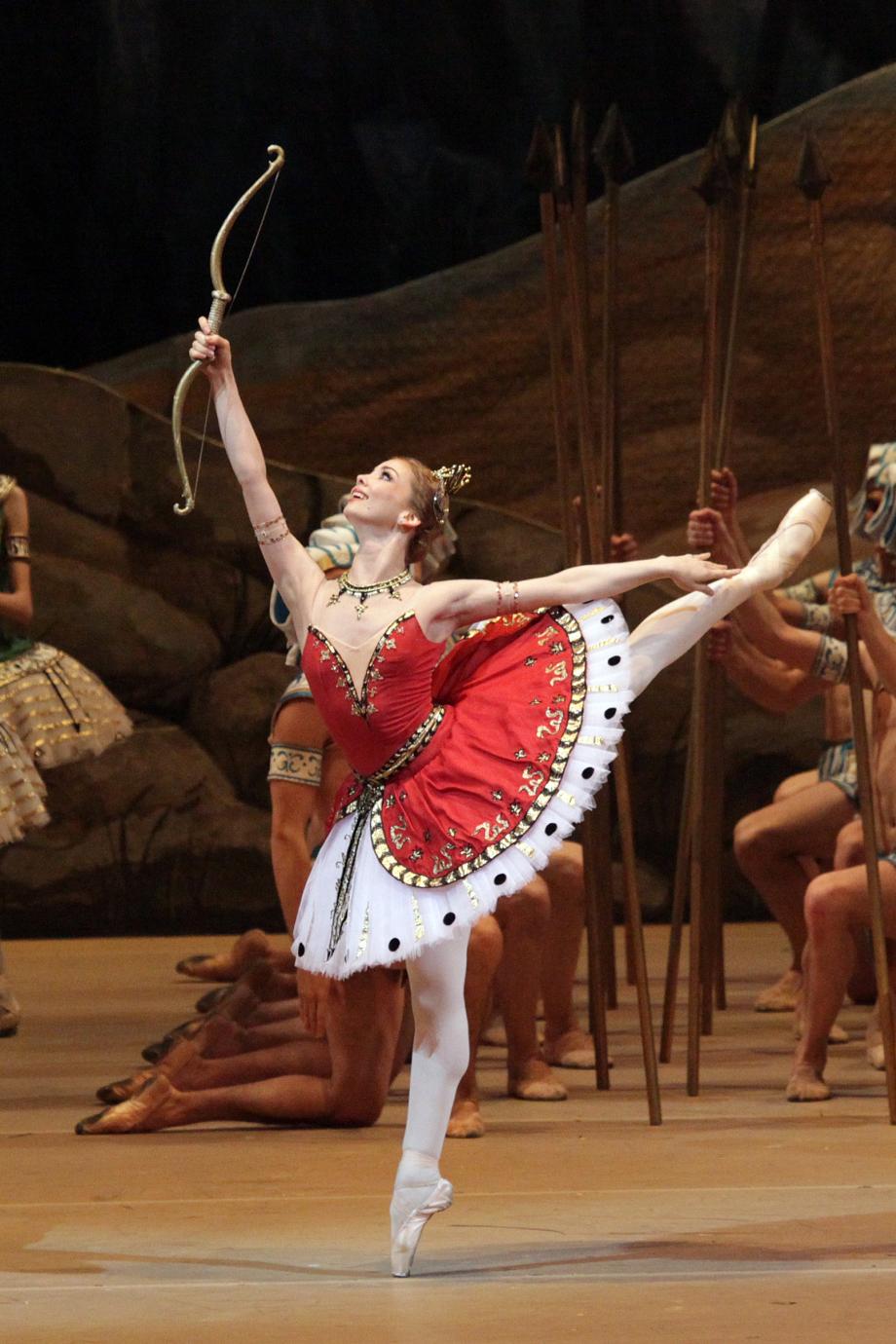
1. E. Obraztsova, “La Fille du Pharaon” by P. Lacotte, Bolshoi Ballet 2019 © Bolshoi Ballet / D. Yusupov Aspicia, the heroine in Petipa’s “La Fille du Pharaon”, was a highly coveted role among ballerinas. Carolina Rosati, an Italian ballerina whose insistence propelled the ballet to creation, danced Aspicia at the world premiere in St. Petersburg in 1862. Mathilde Kschessinska, the unofficial queen of St. Petersburg’s Imperial Theatres, claimed the role as hers at the 1898 revival – meaning that it was like a revolution when the role was given to Anna Pavlova in 1906. “La Fille du Pharaon” was Petipa’s first significant choreographic success. Pierre Lacotte’s take on the ballet for the Bolshoi Ballet in 2000 was a tribute to Petipa and to the famous ballerinas who had shared their knowledge about Aspicia with Lacotte: Lyubov Egorova, Mathilde Kschessinska, and Olga Spesivtseva.

The ballet’s rambling narrative is loosely based on Théophile Gautier’s 1857 novel “The Romance of a Mummy”. Fueled by opium, an English explorer imagines a slew of adventures with Aspicia, the daughter of an Egyptian pharaoh. Aspicia, a mummy, resurrected from her sarcophagus, goes hunting and is saved from a lion’s wrath by the heroic Egyptian Taor (the Englishman), with whom she naturally falls in love. The duo, contending with Aspicia’s forced marriage to the King of Nubia, elopes to an idyllic fishing village. There, they are met by further hazards: suicide attempts, a detour to the underwater realm of the God of the river Nile, and more. Finally, Aspicia and Taor are reunited and happily married – until at the height of the rejoicing, the Englishman awakes from his dream. Continue reading “Pipe Dreams”