Live Life to the Fullest

“Zorba the Greek”
Tartar State Academic Ballet
Jalil Opera and Ballet Tartar State Academic Theatre
Kazan, Russia
November 2025 (video)

by Ilona Landgraf
Copyright © 2026 by Ilona Landgraf
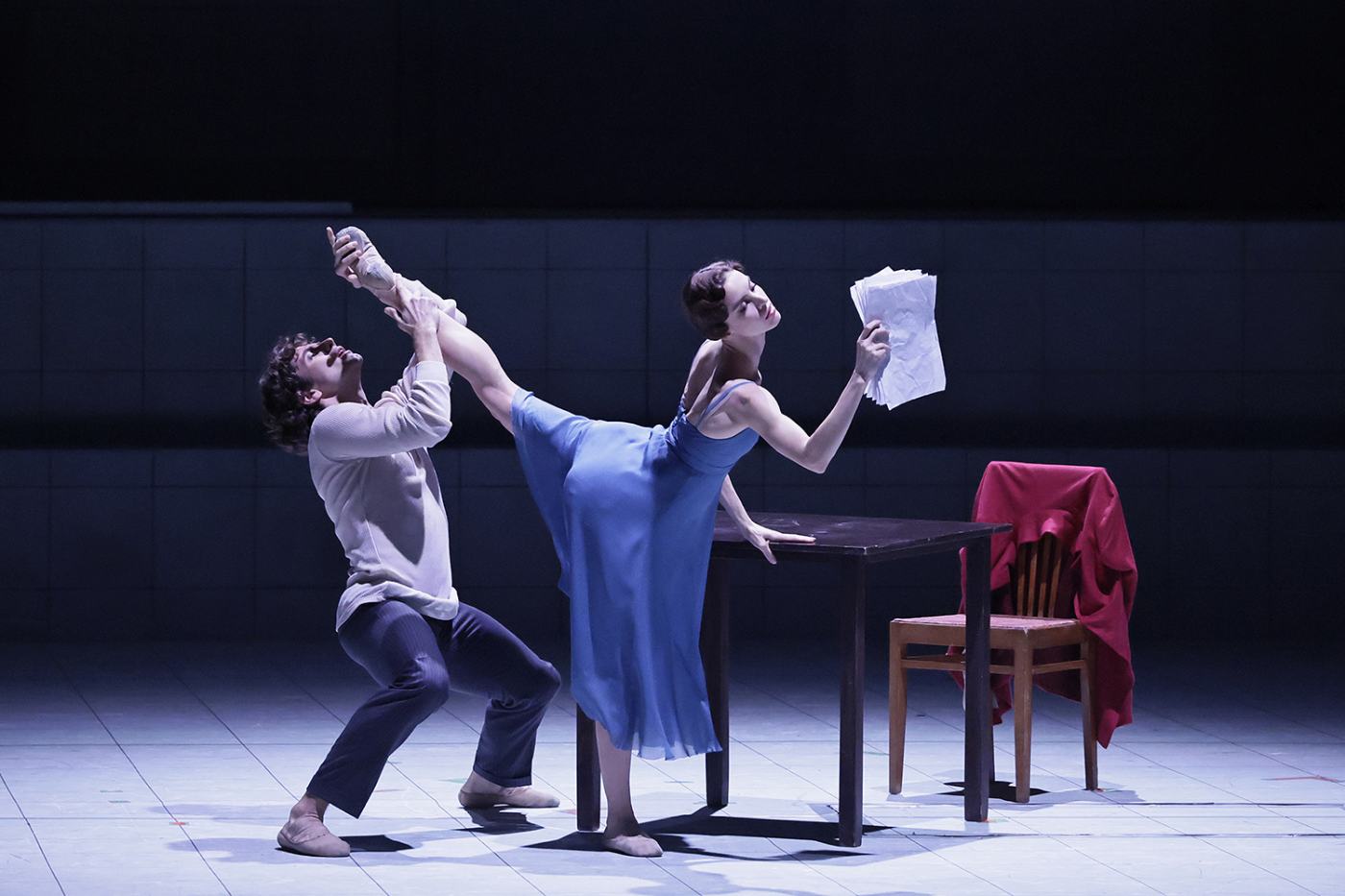
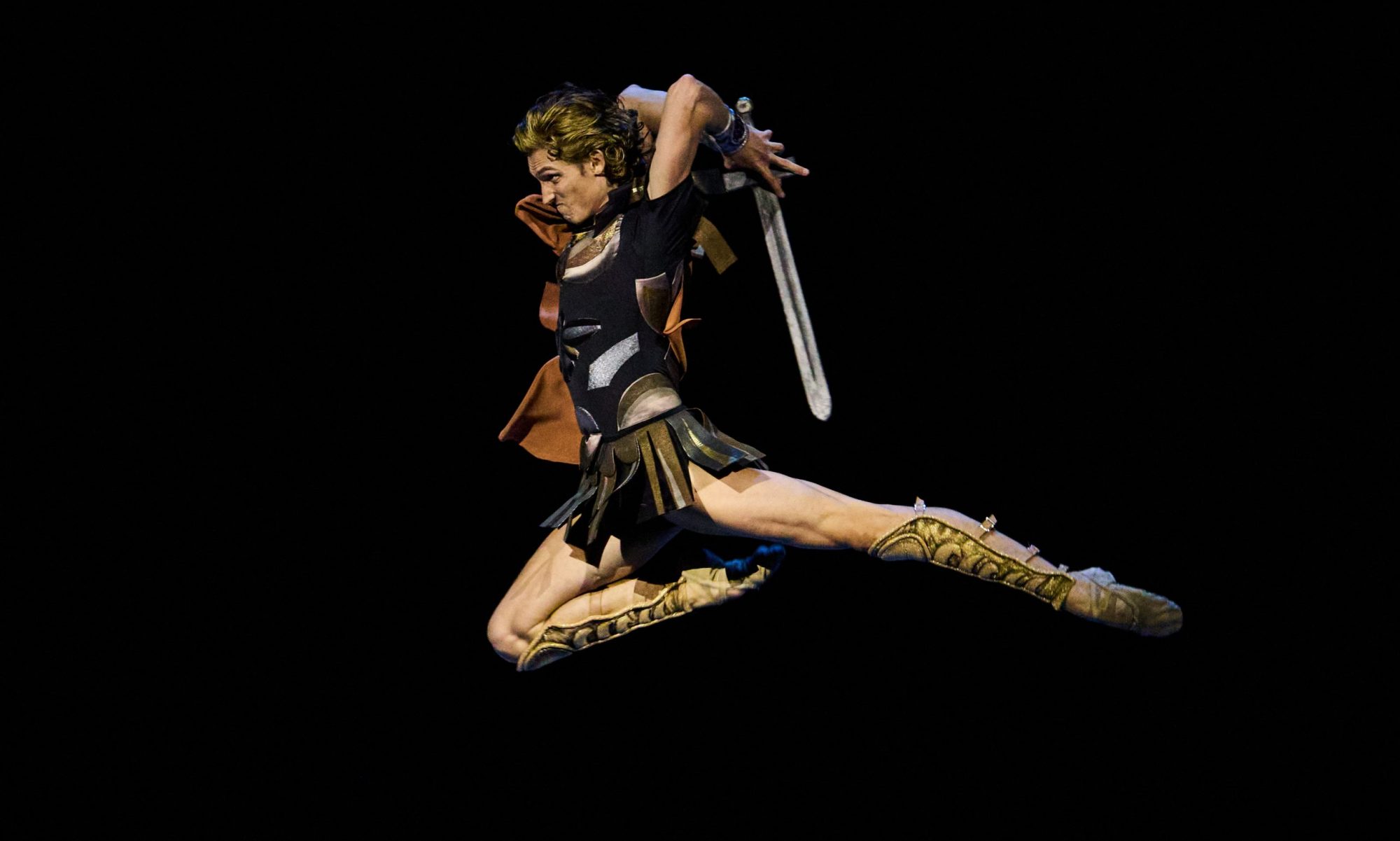
1. “Zorba the Greek” by L.Massine, Tartar State Academic Ballet 2025 © Tartar State Academic Ballet “A man needs a little madness or never dares to cut his ropes and be free,” urged Zorba the buttoned-up aristocrat Basil, in Michael Cacoyannis’s 1964 film Zorba the Greek. The film is based on Nikos Kazantzakis’s 1946 novel Life and Times of Alexis Zorbas, won three Academy Awards, and featured Anthony Quinn as Zorba and Alan Bates as Basil. Zorba, an earthy and boisterous peasant, had this kind of madness and, on their venture to Crete, instilled it in Basil as well.
In addition to the film, the novel inspired a musical, radio play, telemovie, and ballet, which was choreographed by Lorca Massine (Léonide Massine’s son), includes music by Mikis Theodorakis, and premiered at the Arena di Verona in 1988. Vladimir Vasiliev and Gheorghe Iancu danced the leading roles.

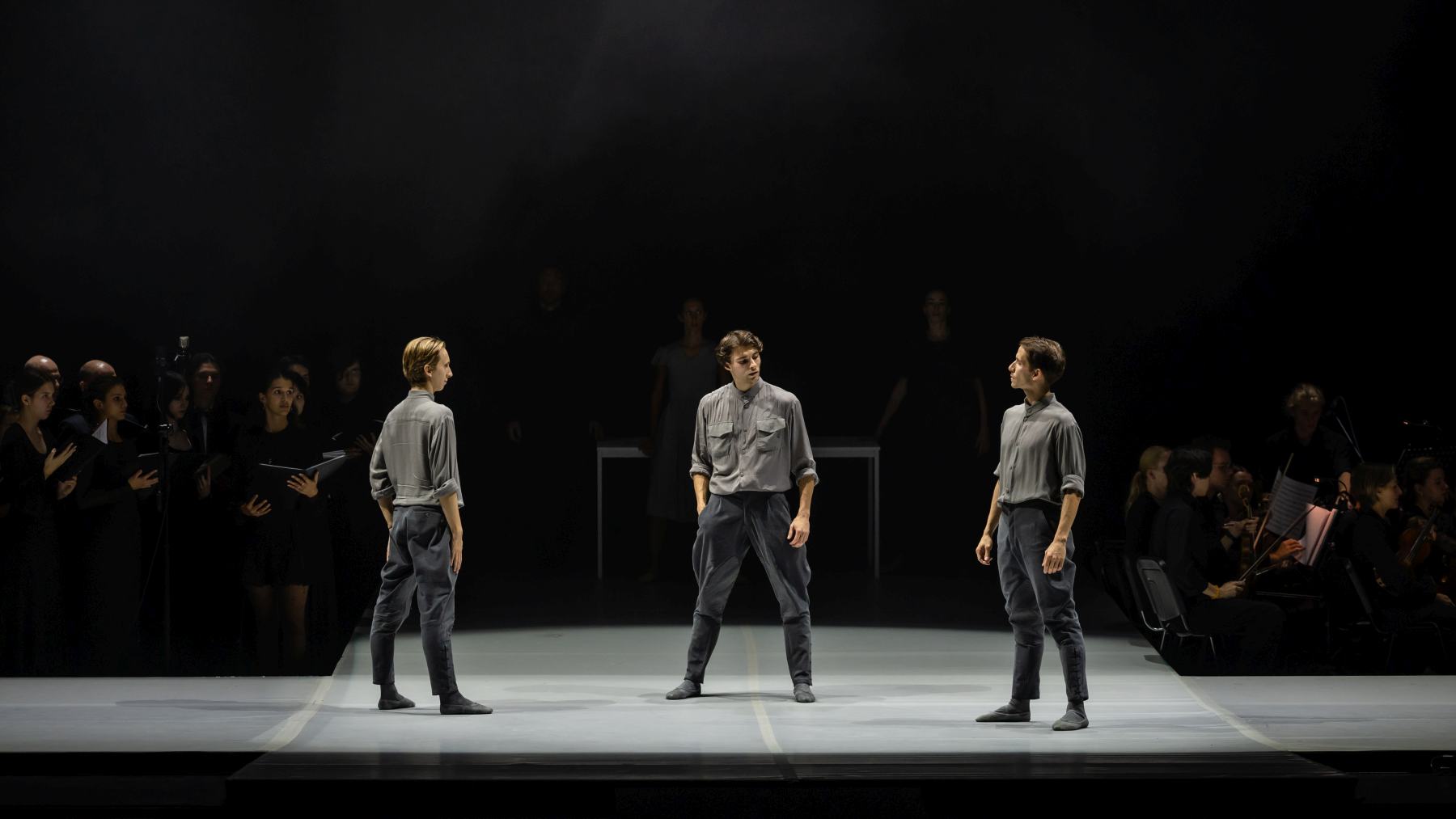
2. Ensemble, “Zorba the Greek” by L.Massine, Tartar State Academic Ballet 2025 © Tartar State Academic Ballet In 2024, an updated version of the ballet premiered for the first time in Russia at the 37th Rudolf Nureyev International Classical Ballet Festival in Kazan and was revived at the 2025 festival. On both occasions, the Bolshoi Ballet’s Igor Tsvirko made a guest appearance in the title role. I had the chance to watch a recording of his latest performance on Russia-Culture TV.

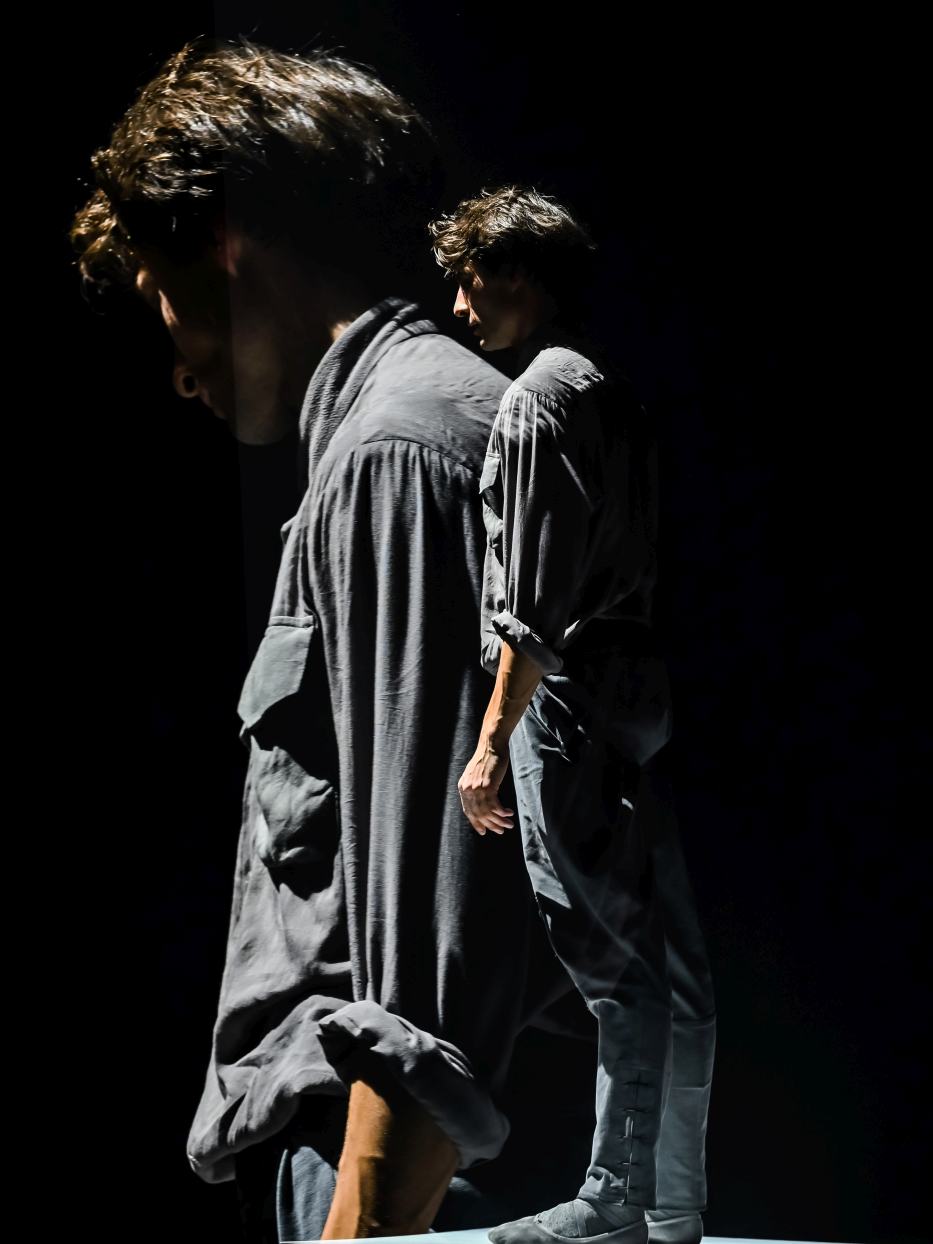
Massine changed the name of Basil to John and condensed the story to focus on his friendship with Zorba and the tragic romances of both men at a Greek location. He dropped their enterprise to exploit a fallow lignite mine, shenanigans with some monks, and the “splendiferous crash” of a timber transport contraption designed to deliver wood to support the shaft. Instead, Massine’s John (Oleg Ivenko) burst onto the scene, his white pants and shirt and happy-go-lucky jumps identifying him as an outsider at first sight. 3. Ensemble, “Zorba the Greek” by L.Massine, Tartar State Academic Ballet 2025 © Tartar State Academic Ballet Though soft-shelled and naive, he appeared to be boastful and disgruntled but also impressed the locals. John’s tours en l’air looked out of place amidst daily physical labor. But he was willing to adapt, and the Greek folk dance steps looked decreasingly artificial on him. Perhaps because he was different, the young widow Marina (Kristina Andreeva-Zakharova), coveted by many, especially the locals’ leader, Manolios (Anton Polodyuk), fell in love with him.


Zorba’s (Igor Tsvirko) every step, by contrast, embraced life from deep within. Dancing was his lifeline in bad times and an outlet for exuberant joy in good times. He loved women but also cynically utilized his charms. He 4. W.Carvalho (John) and ensemble, “Zorba the Greek” by L.Massine, Tartar State Academic Ballet 2025 © Tartar State Academic Ballet couldn’t stop fondling the cabaret girls who suddenly turned up like a dispatch of Scheherazade’s harem. Life had taught him a pragmatic sort of wisdom that grounded him. Often, his spread-out arms asked, “What’s up?” or expressed an encouraging “Come on, buddy, do like me!” A clever mediator, he helped John navigate the locals’ rejection, yet he couldn’t prevent them from assassinating Marina since tradition forbade love affairs with outsiders. Thanks to Zorba, John overcame his grief and restored his optimism. Later, when Zorba’s wife—the elderly Madame Hortense (Alexandra Elagina), a lonely, former French cabaret dancer whom Zorba was coaxed to marry—died, it was John who lifted Zorba’s spirits.

5. A.Gomez (Marina) and ensemble, “Zorba the Greek” by L.Massine, Tartar State Academic Ballet 2025 © Tartar State Academic Ballet Although the locals sometimes broke into a dance as joyful as a well in spring, their movements often reminded me of the work-hardened Cretans of Cacoyannis’s film when they cultivated their barren, stony land. The gestures of Massine’s Greek were straightforward and firm, their bodies proud and tense like high voltage wires. The men (wearing brown pants, white shirts, and suspenders) stepped gravely in line, stomped their feet, and hopped. The women (wearing simple, floor-length sundresses with wide skirts in muted brown, turquoise, and blue and matching headbands) walked gravely like sculptures, one arm held back, the other stretched forward. They often bent one knee sideways, their arms plowing the air as if grabbing onto the power of the earth. Arching their chests upward, they seemed to open their souls to heaven.

7. K.Andreeva-Zakharova (Marina) and W.Carvalho (John), “Zorba the Greek” by L.Massine, Tartar State Academic Ballet 2025 © Tartar State Academic Ballet 6. A.Gomez (Marina) and S.Bulatov (John), “Zorba the Greek” by L.Massine, Tartar State Academic Ballet 2025 © Tartar State Academic Ballet Marina was one of them, but her deep blue, subtly shiny dress indicated her depth. Caution and the pressure of traditions kept her sensuality under tight wraps, but her long, expressive arms betrayed her yearning. Every fiber of her body opposed Manolios, but she responded immediately to John’s interested glance. Gradually, her trust in him grew, and the moment she threw her widow’s veil away and changed into a mulberry red dress, it was clear that she had decided on John. The locals, above all Manolios, repeatedly separated them, their arms severing their embraces like a knife or battering ram. Manolios’s wrath was cold and calculating and thus especially dangerous. Marina couldn’t escape the folk who encircled her. She jumped only once, but then her head disappeared amidst the crowd. Her execution and the dissonant music that accompanied it were strongly reminiscent of the Chosen One’s sacrifice in Le Sacre du printemps.

8. A.Polodyuk (Manolios) and ensemble, “Zorba the Greek” by L.Massine, Tartar State Academic Ballet 2025 © Tartar State Academic Ballet 9. K.Andreeva-Zakharova (Marina), “Zorba the Greek” by L.Massine, Tartar State Academic Ballet 2025 © Tartar State Academic Ballet Still dreaming of past glamour, Madame Hortense wore fishnets, a rose feather boa, and a purple hat on her red hair. As long as Zorba and John nurtured her fragile dream, she felt vital. Unlike in the film, where Zorba promised “Twenty meters of white satin covered in pearls” that he never delivered, the ballet’s Madam Hortense was presented with an extra-long, double wedding veil, a long pearl necklace, and a red rose that made her feel beautiful and loved. But the candle-holding procession that followed her and Zorba heralded her funeral. Once death approached, many shadow-like women grabbed Madame Hortense’s gauzy dress, leaving her in underwear (in the film, old, withered village women crouched next to Madame Hortense’s deathbed and grabbed everything that wasn’t nailed down the second she died). Sapped of all energy, she sat motionless, tears running down her huge, sad eyes. The only thing she clung to as she dropped dead in Zorba’s arms was his red handkerchief.

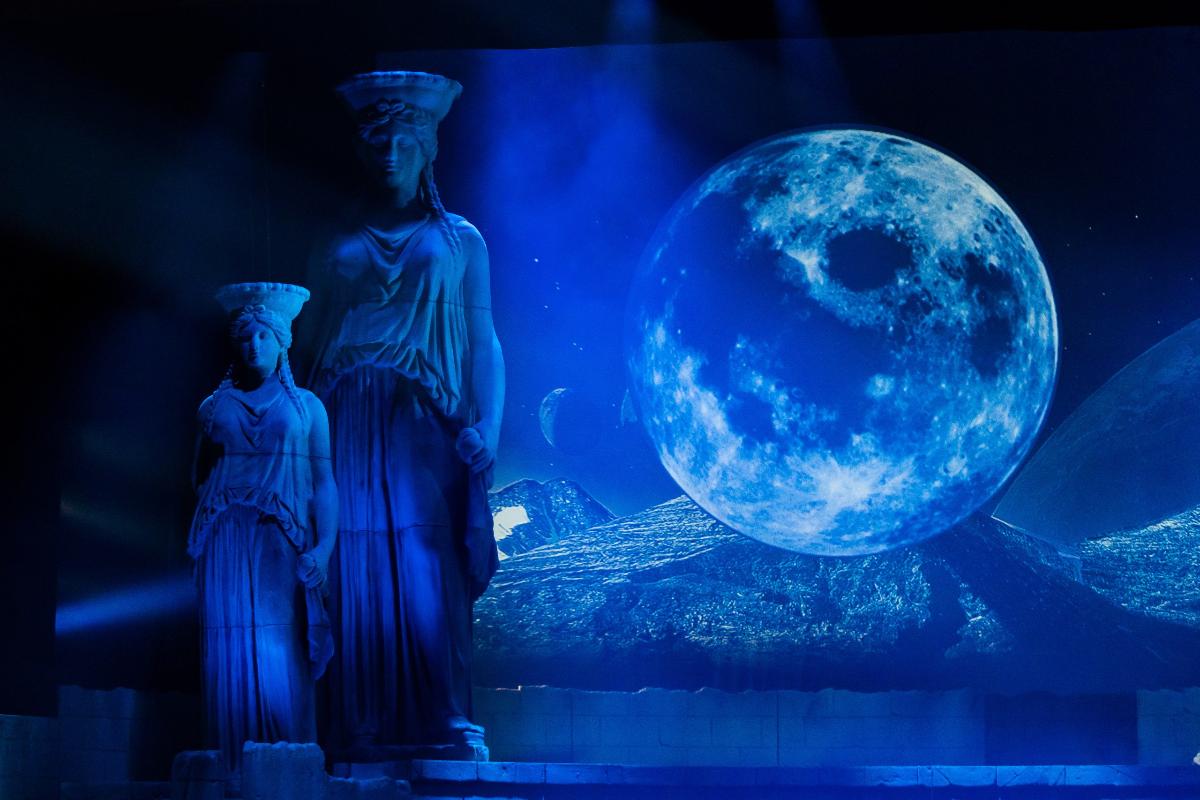
10. A.Elagina (Madame Hortense), “Zorba the Greek” by L.Massine, Tartar State Academic Ballet 2025 © Tartar State Academic Ballet Set designer Viktor Gerasimenko created a Greek town that was by no means as dilapidated as the film’s Cretan mountain village. It lay invisible behind a solid, huge stone wall with three round-arched passages. The square in front of the wall was reserved for the dancers. They were framed by a choir of roughly one-hundred singers who stood on two staircases that connected the square with a catwalk on top of the wall. Imposing Greek statues (resembling the caryatids of Athens’ Erechtheion temple) at the top of the staircases reminded viewers that, however dramatic the goings-on, they would be minuscule compared to history. A huge, changing moon (video design by Dmitry Shamov) indicated the passing of time. At times, galaxies shone in the distance. When the locals blazed with anger, the sky turned burning red.

11. S.Bulatov (John), L.Starkova (Madame Hortense), M.Timaev (Zorba), and ensemble; “Zorba the Greek” by L.Massine, Tartar State Academic Ballet 2025 © Tartar State Academic Ballet Theodorakis’s score was imbued with the passion of Greek folk music. It burst with joy, plunged into gloom, and throbbed with agitation. During its first solemn song, the choir, wearing monastic-like garbs, slowly stepped from the wall’s terrace downstairs and remained on the staircase for the entire performance. The two female protagonists, Marina and Madame Hortense, had singer doubles who accompanied the dancers from the terrace, their black caftans and headscarves almost merging with the darkness. Alina Sharipzhanova sang in Greek, and her voice reverberated with Marina’s inner life, whereas Elmira Kallimulina’s melancholic French love chanson encapsulated the alter ego of Madame Hortense.

12. M.Timaev (Zorba), S.Bulatov (John), and ensemble; “Zorba the Greek” by L.Massine, Tartar State Academic Ballet 2025 © Tartar State Academic Ballet Although both Zorba and John lost their loved ones, they regained their zest for life. Like the refreshing surge that replaced the mountain scenery in the background, their perspectives had changed. Cheered on by the locals, their arms linked for a final sirtaki (which, by the way, was created during the 1964 filming as a substitute for a dance the injured Anthony Quinn couldn’t perform and afterward became a symbol of Greece).
Midway into the curtain calls, Massine left the stage, surrounded the orchestra pit, and, from the first row of the auditorium, conducted an encore. Again, the high spirits from the sirtaki surged toward the audience, and Tsvirko and Ivenko outdid one another in double and triple saut de basque. As Anthony Quinn’s Zorba would have said, “It couldn’t have been more splendiferous!”

Links: Website of the Jalil Opera and Ballet Tartar State Academic Theatre
Interview with Lorca Massine and rehearsals of Zorba the Greek (Television channel Efir, 2024)
Report about Zorba the Greek (Television channel Efir, 2024)
Report about Zorba the Greek at the Rudolf Nureyev International Classical Ballet Festival (Television channel Efir, 2024)
Kristina Andreeva-Zakharova on Zorba the Greek
The music of Zorba the Greek (Television channel Efir, 2024)
 
Photos: (The photos show different casts from other performances.)
1. “Zorba the Greek” by Lorca Massine, Tartar State Academic Ballet 2025
2. Ensemble, “Zorba the Greek” by Lorca Massine, Tartar State Academic Ballet 2025
3. Ensemble, “Zorba the Greek” by Lorca Massine, Tartar State Academic Ballet 2025
4. Wagner Carvalho (John) and ensemble, “Zorba the Greek” by Lorca Massine, Tartar State Academic Ballet 2025
5. Amanda Gomez (Marina) and ensemble, “Zorba the Greek” by Lorca Massine, Tartar State Academic Ballet 2025
6. Amanda Gomez (Marina) and Salavat Bulatov (John), “Zorba the Greek” by Lorca Massine, Tartar State Academic Ballet 2025
7. Kristina Andreeva-Zakharova (Marina) and Wagner Carvalho (John), “Zorba the Greek” by Lorca Massine, Tartar State Academic Ballet 2025
8. Anton Polodyuk (Manolios) and ensemble, “Zorba the Greek” by Lorca Massine, Tartar State Academic Ballet 2025
9. Kristina Andreeva-Zakharova (Marina), “Zorba the Greek” by Lorca Massine, Tartar State Academic Ballet 2025
10. Alexandra Elagina (Madame Hortense), “Zorba the Greek” by Lorca Massine, Tartar State Academic Ballet 2025
11. Salavat Bulatov (John), Lada Starkova (Madame Hortense), Mikhail Timaev (Zorba), and ensemble; “Zorba the Greek” by Lorca Massine, Tartar State Academic Ballet 2025
12. Mikhail Timaev (Zorba), Salavat Bulatov (John), and ensemble; “Zorba the Greek” by Lorca Massine, Tartar State Academic Ballet 2025
all photos © Tartar State Academic Ballet
Editing: Kayla Kauffman

In Commemoration of Ekaterina Maximova

“Fragments of One Biography”
Bolshoi Ballet and Guests
Bolshoi Theatre
Moscow, Russia
February 01, 2024 (video)

by Ilona Landgraf
Copyright © 2024 by Ilona Landgraf

1. Ensemble, “Fragments of One Biography” staged by V.Vasiliev, Bolshoi Ballet 2024 © Bolshoi Ballet / E.FetisovaOn February 1st, the Bolshoi Ballet’s prima ballerina, Ekaterina Maximova (1939-2009), would have celebrated her 85th birthday. A phenomenally successful (and multi-decorated) artist, Maximova’s fame reached far beyond Russia’s borders. After retiring from the stage of the Bolshoi in 1988, she continued to dance with other Russian and international companies—and sometimes even returned home to the Bolshoi. From 1990 on, Maximova worked as a coach, teacher, and member of several arts councils and committees. Every five years, Maximova’s husband, Vladimir Vasiliev, stages a gala at the Bolshoi in honor of his late wife. I was able to watch this year’s event on video. Continue reading “In Commemoration of Ekaterina Maximova”

Leader(s) and Followers

“Five Years and Three Days With Makhar Vaziev”
Bolshoi Ballet
Bolshoi Theatre
Moscow, Russia
February 26, 2021 (documentary)

by Ilona Landgraf
Copyright © 2021 by Ilona Landgraf

1. I.Tsvirko and M.Vaziev after a performance of “Ivan the Terrible”, “Ivan the Terrible” by Y. Grigorovich, Bolshoi Ballet 2019 © Bolshoi Ballet / G.Uféras This year marks the fifth season with Makhar Vaziev as head of the Bolshoi Ballet. Upon this occasion, the Bolshoi Theatre released the TV documentary “Five Years and Three Days with Makhar Vaziev”, which is also available on YouTube (and includes English subtitles). For three days at the end of January, a film crew followed Vaziev from meeting to rehearsal to performance and back again, conducting several interviews along the way. Despite COVID-19, everyday work has continued at the Bolshoi. We witness the company’s preparations for two revivals: a performance of “Nureyev”, supervised by its stage director and set designer Kirill Serebrennikov, and a re-run of Sergei Vikharev’s version of “CoppéliaContinue reading “Leader(s) and Followers”

Weighty

“The Winter’s Tale”
Bolshoi Ballet
Bolshoi Theatre
Moscow, Russia
April 06, 2019 (matinee and evening performance)

by Ilona Landgraf
Copyright © 2019 by Ilona Landgraf

1. E. Svolkin, L. Timoshenko, O. Smirnova, and D. Savin, “The Winter's Tale” by C. Wheeldon, Bolshoi Ballet 2019 © Bolshoi Ballet / D. YusupovThe Bolshoi Ballet recently added Christopher Wheeldon’s “The Winter’s Tale” to their repertoire – and what a fortunate choice that was! It is a co-production of the Royal Ballet and the National Ballet of Canada, and premiered in London in 2014. It’s strange that such a strong piece of work is only now being performed by a third company.

The ballet is based on Shakespeare’s play of the same name – one of his intricately-plotted later works, which is classified as a comedy despite its Continue reading “Weighty”

Still Elusive: The Eternal Feminine

“Ondine”
Bolshoi Ballet
Bolshoi Theatre
Moscow, Russia
March 04, 2017

by Ilona Landgraf
Copyright © 2017 by Ilona Landgraf

1. I.Tsvirko and E.Krysanova, “Ondine” by V.Samodurov, Bolshoi Ballet 2017 © Bolshoi Theatre / D.YusupovIn 1958 Frederick Ashton choreographed the story of “Ondine” for The Royal Ballet in London. This three-act work is about the water nymph Ondine – a role Ashton made specially for Margot Fonteyn – who becomes the object of a worldly prince’s desire. Upon finding the prince unfaithful, Ondine kills him with a kiss. German composer Hans Werner Henze was commissioned with the “Undine” music. Other choreographers subsequently used Henze’s score for their own productions, the most recent dating from the summer of 2016 by Vyacheslav Samodurov for the Bolshoi Ballet. Continue reading “Still Elusive: The Eternal Feminine”

A Dutch Program at the Bolshoi

“Frank Bridge Variations / Short Time Together / Symphony of Psalms”
Bolshoi Ballet
Bolshoi Theatre
Moscow, Russia
March 02, 2017

by Ilona Landgraf
Copyright © 2017 by Ilona Landgraf

1. D.Rodkin and E.Shipulina, “Frank Bridge Variations” by H.van Manen, Bolshoi Ballet 2017 © M.Logvinov / Bolshoi TheatreReading the names of choreographers Hans van Manen, Paul Lightfoot and Jiří Kylián as part of the same program one immediately thinks of a performance in Amsterdam or Den Haag, or maybe also in Germany. Yet this triple bill was the Bolshoi’s. It’s a menu that’s not quite so familiar for the Moscow audience. Applause was respectable, though not overwhelming. The dancers, however, were in great shape! Continue reading “A Dutch Program at the Bolshoi”

Maillot’s Idea of How to Tame

Taming of the Shrew”
Bolshoi Ballet
Royal Opera House
London, Great Britain
August 03, 2016

by Ilona Landgraf
Copyright © 2016 by Ilona Landgraf

1. E.Krysanova and V.Lantratov, “The Taming of the Shrew” by J.-C.Maillot, Bolshoi Ballet © M.Logvinov/Bolshoi TheatreThe Bolshoi Ballet’s three-week tour to London draws crowds of ballet aficionados to the Royal Opera House. Every evening each of the five productions is sold out. Those include the much-loved classics, “Swan Lake”, “Don Quixote” and “Le Corsaire”, as well as “The Flames of Paris” by Alexei Ratmansky and Jean-Christophe Maillot’s “The Taming of the Shrew” which premiered two years ago at the Bolshoi. “Shrew” was scheduled only twice. I saw the first performance.

Similar to Kurt-Heinz Stolze’s Scarlatti-pastiche for John Cranko’s “Shrew”, Maillot also cobbled together the score. He assembled less well known film music and excerpts of symphonies by Dmitri Shostakovich which go along with the events on stage like lubricating oil. Whether swooshing or romantic, the Orchestra of the Bolshoi Theatre under Igor Dronov’s baton played with verve.

The story sets off at the estate of Baptista, a wealthy lord in Padua. But the two broad, curved outdoor stairs arching over the house’s entrance, designed by Ernest Pignon-Ernest, don’t relate to any specific town. Baptista is beset with two daughters, the prickly Katharina and her younger sister, the much-adored Bianca. But the latter will not be allowed to marry until Katharina first wears her wedding ring. Continue reading “Maillot’s Idea of How to Tame”