Legendary

“Swan Lake”
Bolshoi Ballet
Bolshoi Theatre
Moscow, Russia
September 7 and 8, 2026 (Historic Stage)

by Ilona Landgraf
Copyright © 2026 by Ilona Landgraf
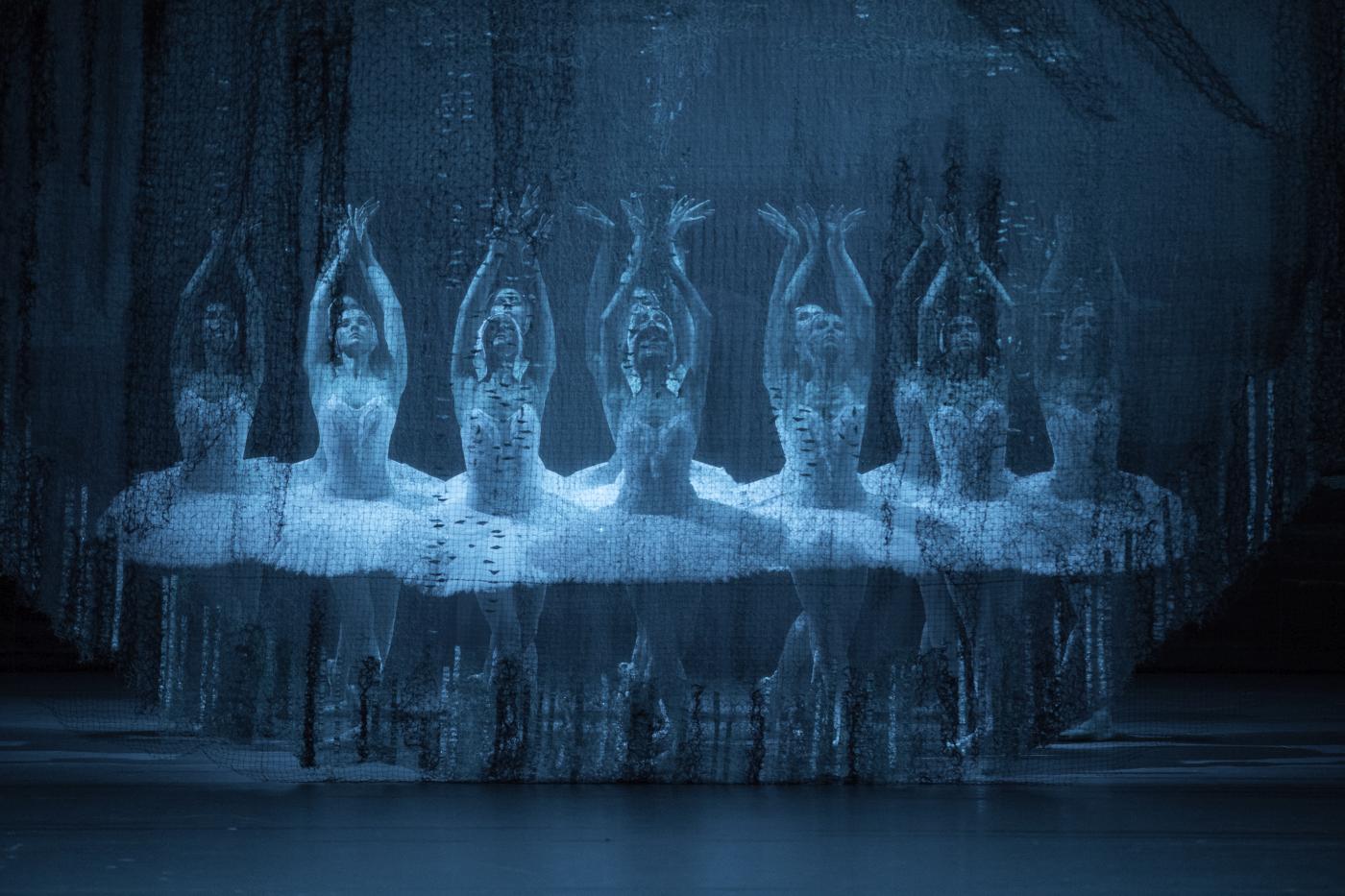
1. Ensemble, “Swan Lake” by Y.Grigorovich, Bolshoi Ballet 2026 © Bolshoi Theatre/N.VoronovaThe Bolshoi Ballet is legendary for its Swan Lake. The first performance took place in 1877, almost one hundred and fifty years ago. This September, the swans danced for the 1,868th time, which translates to roughly thirteen Swan Lakes per year. Since 2001, the company has performed Yuri Grigorovich’s version, which includes scenes by Marius Petipa, Lev Ivanov, and Alexander Gorsky.

Grigorovich’s Swan Lake is grand. Its concepts and ideals represent the highest achievements of humanity and culture—dignity, decorum, grace, love, and unmatched beauty—and it shows how easily human nature can be led awry. Compared to Vladimir Bourmeister’s Swan Lake at the Stanislavsky Theatre, a ballet that reveals the protagonists’ inner life like none I’ve seen so far, Grigorovich portrays them as emblematic figures in an allegory, the sad ending of which Tchaikovsky’s prologue forebodes. Continue reading “Legendary”
An Opening Salute

“The Sleeping Beauty”
Bolshoi Ballet
Bolshoi Theatre
Moscow, Russia
September 07, 2024 (live stream)

by Ilona Landgraf
Copyright © 2024 by Ilona Landgraf

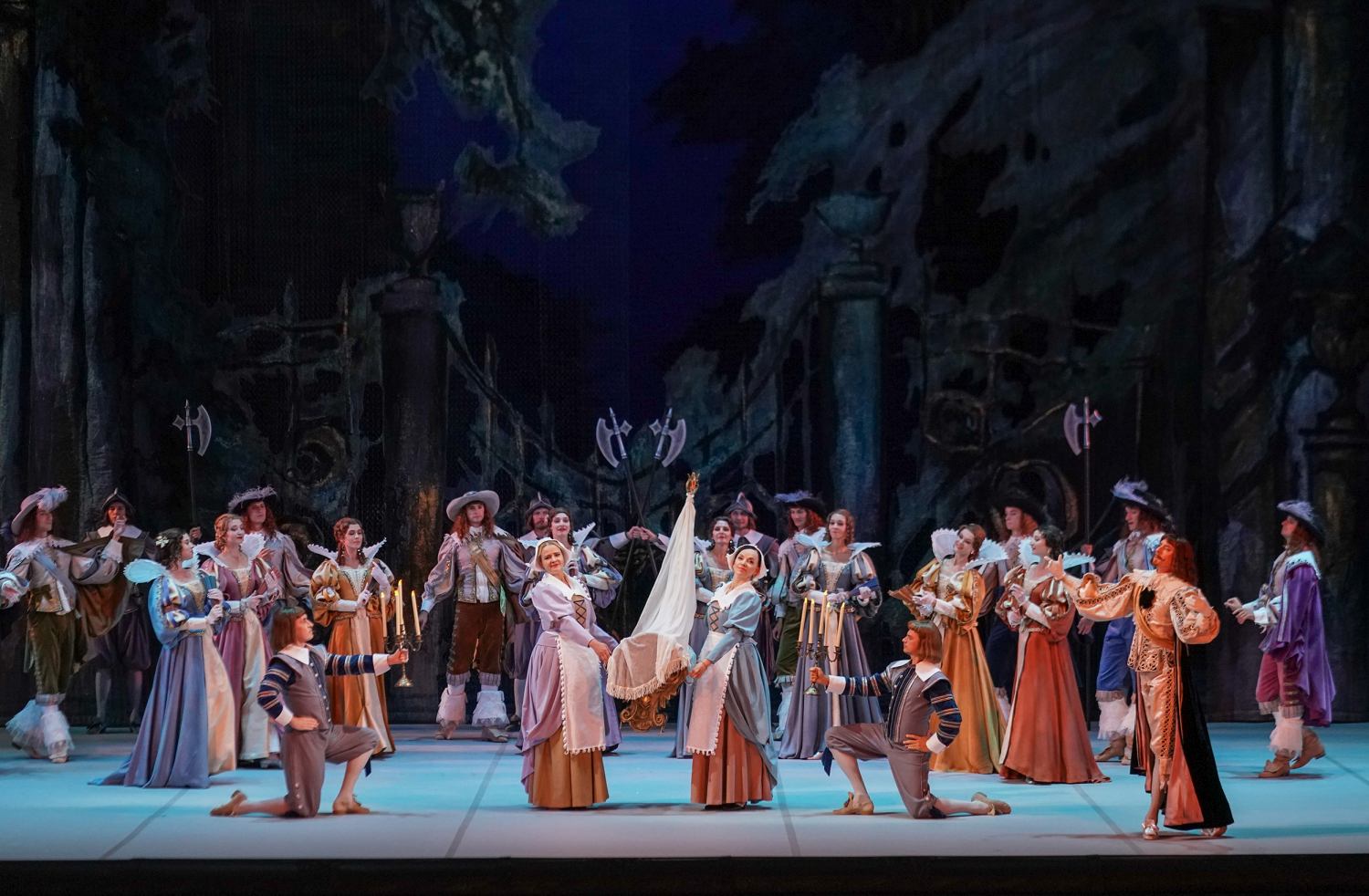
 1. Y.Ostrovsky (Catalabutte) and ensemble, “The Sleeping Beauty” by Y.Grigorovich after M.Petipa, Bolshoi Ballet 2024 © Bolshoi Theatre/P.Rychkov The Bolshoi Ballet opened its 249th season with a revival of Yuri Grigorovich’s The Sleeping Beauty, which has been absent from the stage for four years. Because of the thorough change of décor, the production was announced as a premiere. It swapped the opulent (and often criticized) sets and costumes that Ezio Frigerio and Franca Squarciapino designed for the 2011 revival (celebrating the reopening of the theater’s Historic Stage after six years of refurbishment) for the restrained décor that Simon Virsaladze (1909–1989) created for Grigorovich’s second version of the ballet in 1973. The subdued hues and aquarelle-ish style of its courtly surroundings direct the gaze toward the colorful costumes (recalling French court fashion from King Louis XIII’s to the Sun King, Louis XIV’s, reign), beautiful flower garlands and bouquets at Aurora’s birthday party, and, most importantly, the dancers and their performances. Raising the curtain didn’t elicit oohs and aahs from the audience as, for example, Jürgen Rose’s décor for Marcia Haydée’s Sleeping Beauty regularly has done on Western stages. Continue reading “An Opening Salute”

Munich’s Heroes

“Spartacus”
Bavarian State Ballet
National Theater
Munich, Germany
December 23, 2016

by Ilona Landgraf
Copyright © 2016 by Ilona Landgraf

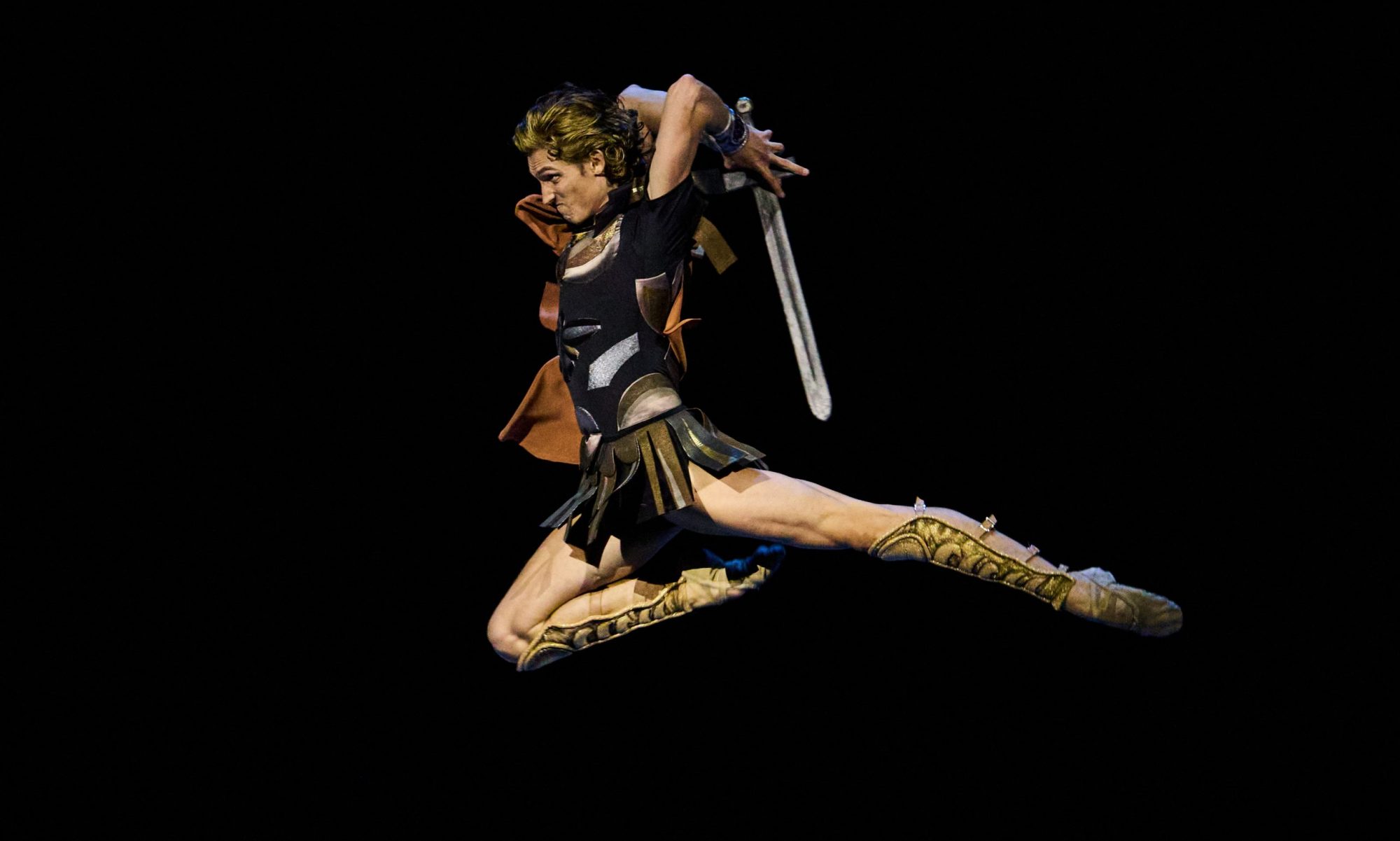
1. V.Shklyarov and ensemble, “Spartacus” by Y.Grigorovich, Bavarian State Ballet © W.Hösl 2016Since last Thursday, shortly before Christmas Eve, heroic fighters have commanded the stage of Munich’s National Theater. Hordes of men together with a few women all of them representing characters of either Thracian or Roman lineage, dance “Spartacus”, the epic about a Thracian man who, after having been enslaved by the Roman consul Crassus, engineers a revolt. What will happen, happens: Spartacus dies a hero’s death.

Big doses of fierce fighting and repeated displays of valor need a strong portion of the erotic in order to make them palatable to the audience. That is supplied by two women – Phrygia, Spartacus’s faithful mistress, and Aegina, Crassus’s conniving courtesan. The ballet’s action is based on the novella “Spartaco”, penned in 1874 by Raffaello Giovagnoli, who likely took liberties with historical material from before the Christian era.

There are plenty of “Spartacus” ballets in existence. Budapest, Vienna, Hong Kong and Cape Town have their own productions. Russia has seen four versions: the most recent is Georgy Kovtun’s for the Mikhailovsky Theatre. Aram Khachaturian had composed the music in 1954, and the first staging, by Igor Moiseyev for the Bolshoi in 1956 was short-lived. It was given only two performances, perhaps because it contained much pantomime but too little dancing. Continue reading “Munich’s Heroes”